No products in the cart.
Digital Transformation of Your IT Service
Outsourcing Through Our ZONE IBOSS Platform

Saudi manufacturers are operating in a market shaped by industrial diversification, localization, automation, and rising expectations for resilient supply chains. As production facilities become more connected, companies need clearer visibility into equipment, processes, energy use, and product quality.
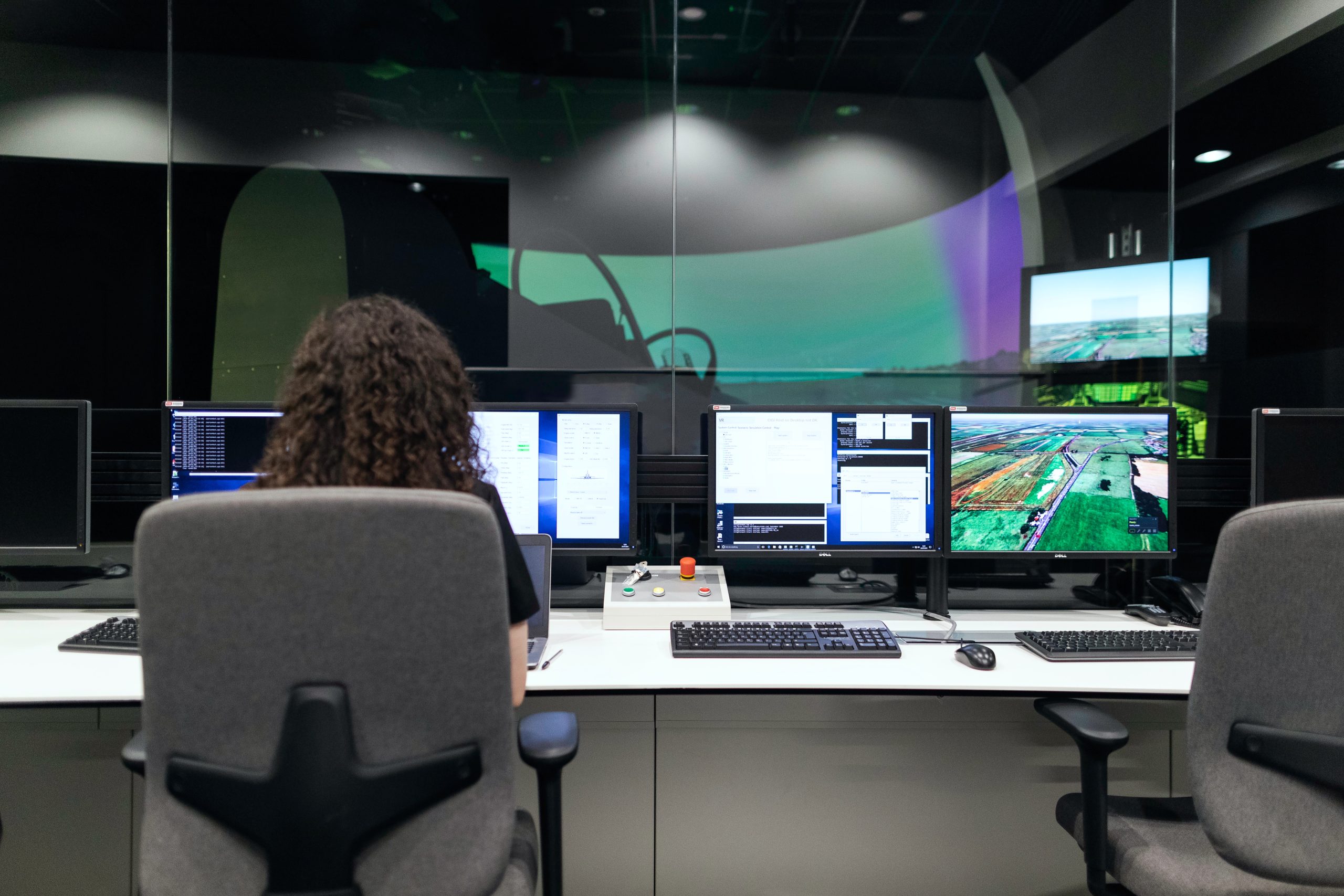
A digital twin creates a dynamic virtual representation of a physical asset, production line, or entire facility. It combines operational technology data, industrial sensors, engineering records, and analytics to show how a system is performing and how it may respond to change.
For manufacturers in the Kingdom, this technology can support faster decisions, lower operating costs, and more reliable production. Its value is strongest when the model is connected to practical business goals rather than treated as a standalone visualization project.
Saudi Arabia’s manufacturing base includes petrochemicals, food processing, pharmaceuticals, construction materials, automotive components, and advanced industrial production. Each sector faces different operational pressures, yet many share the need to improve asset utilization, reduce unplanned downtime, and meet strict quality requirements.
Digital twins help plant teams move from reactive maintenance to condition-based and predictive maintenance. A virtual model can combine vibration, temperature, pressure, throughput, and maintenance history to identify patterns that may indicate equipment degradation before a breakdown occurs.
The approach also supports national ambitions for smart factories and digital transformation. When manufacturers can test process changes in a simulated environment, they can make progress toward automation while controlling the operational risk associated with changing live production systems.
A useful twin depends on the quality and accessibility of its underlying data. Sensors, programmable logic controllers, manufacturing execution systems, enterprise resource planning platforms, and quality systems may all hold relevant information. Connecting these sources creates a shared operational picture.
That connection is often harder than selecting visualization software. Legacy machinery may use different communication protocols, while data ownership can be divided between engineering, IT, maintenance, and production teams. An experienced digital transformation partner can help define the architecture, integration priorities, cybersecurity controls, and implementation sequence.
The result should be more than a 3D model. A production twin becomes valuable when it helps a supervisor identify a bottleneck, enables an engineer to compare process settings, or gives executives reliable performance indicators across multiple sites.
Digital twin technology can improve manufacturing efficiency at several points in the production cycle. During planning, teams can model line layouts, staffing requirements, material flow, and production capacity. During operations, they can monitor performance against expected conditions and investigate deviations more quickly.
Virtual commissioning is another important use case. Manufacturers can test automation logic, machine interaction, and control sequences before equipment is installed or modified. This can shorten commissioning periods and reduce the cost of discovering design issues after production has begun.
| Manufacturing priority | Conventional approach | Digital twin-enabled approach | Potential operational effect |
|---|---|---|---|
| Equipment maintenance | Fixed schedules or emergency repairs | Condition monitoring and predictive alerts | Less downtime and better spare-parts planning |
| Production planning | Static assumptions and manual estimates | Scenario modeling using live and historical data | More accurate capacity and scheduling |
| Quality control | End-of-line inspection | Continuous process monitoring and root-cause analysis | Earlier defect detection and lower waste |
| Energy management | Periodic meter reviews | Real-time usage analysis by asset or process | Reduced energy intensity |
| Expansion projects | Physical trials and lengthy adjustments | Virtual testing before deployment | Lower commissioning risk and faster ramp-up |
These gains are measurable when organizations establish baseline indicators. Useful metrics include overall equipment effectiveness, mean time between failures, scrap rates, changeover duration, energy per unit, and order fulfillment performance.
A scalable architecture usually includes data collection, edge or industrial connectivity, a secure data platform, analytics, and user-facing applications. Edge processing can support fast responses near the machine, while cloud or central platforms enable cross-site analysis and long-term reporting.
Cybersecurity must be built into every layer. Connected production assets increase the importance of identity management, network segmentation, patch governance, access controls, and monitoring. Saudi manufacturers should also align the program with internal risk policies and relevant national cybersecurity expectations.
Interoperability is equally important. A twin should be able to exchange information with existing business and industrial systems rather than creating another isolated data environment. Open standards, documented interfaces, and clear ownership rules make future upgrades easier and protect the value of the initial investment.
Manufacturers can begin with a focused use case that has visible financial or operational impact. Predictive maintenance on a critical compressor, energy optimization in a high-consumption process, or bottleneck analysis on a packaging line can provide a manageable starting point.
The next step is to define the required data, performance baseline, decision owners, and success criteria. A pilot should include production, maintenance, engineering, IT, and cybersecurity stakeholders so that the solution reflects real workflows rather than an abstract technology demonstration.
Once the pilot proves its value, the organization can expand the model to additional assets, lines, and facilities. Software testing, systems integration, and solution provider management are important during this stage because weak interfaces or untested assumptions can limit adoption.
Technology alone does not create a smart factory. Operators and engineers need training that explains how digital insights support their existing responsibilities. If alerts are excessive, unclear, or disconnected from maintenance procedures, teams may ignore them.
Governance should define who owns the model, who approves data changes, how asset information is updated, and how performance results are reviewed. Manufacturers should also distinguish between experimental simulations and production decisions that require formal engineering or safety approval.
A strong program links every digital twin initiative to business outcomes. Reduced downtime, higher throughput, lower waste, improved energy efficiency, and faster product introduction provide a clearer basis for investment than the number of connected machines.
The impact of digital twins on Saudi manufacturing efficiency will depend on disciplined execution. Organizations that combine industrial expertise with strong IT integration can turn machine data into better maintenance decisions, more stable production, and informed capacity planning.
Manufacturers preparing their next modernization initiative can assess current systems, identify high-value use cases, and build a phased roadmap with ZONE IBOSS. Explore the company’s technology services at ZONE IBOSS and take the next step toward a more connected, efficient production environment.
The “ZONE IBOSS” team of experts are fully prepared to provide immediate assistance to choose the best service and the best solution for your business today.