No products in the cart.
Digital Transformation of Your IT Service
Outsourcing Through Our ZONE IBOSS Platform
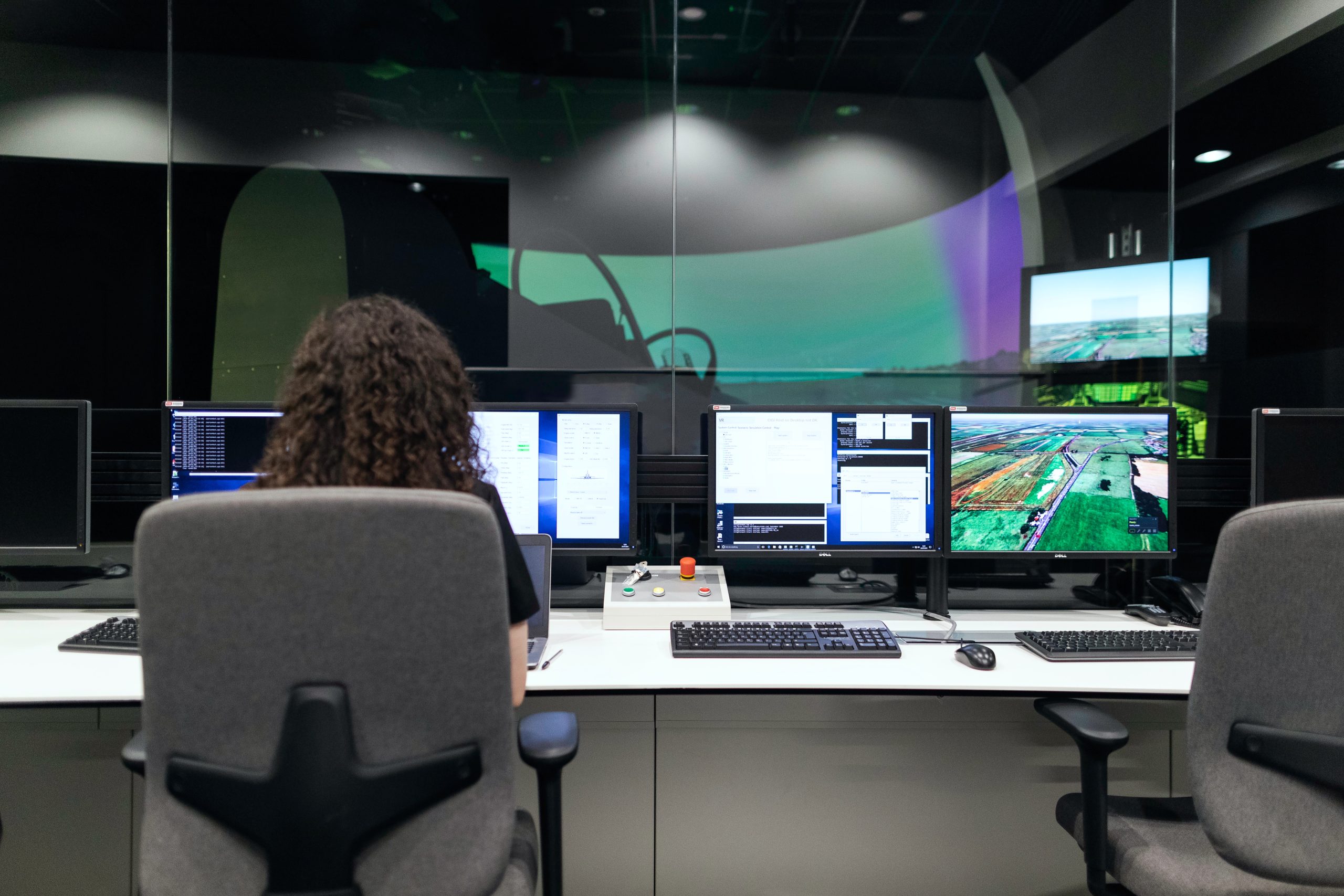
Saudi education is moving towards learning environments that combine physical campuses with cloud platforms, live teaching and digital assessment. Virtual classrooms and online laboratories can extend access beyond major cities, support blended delivery and give learners more flexible ways to practise technical skills.
For schools, universities and vocational providers, this shift involves more than purchasing video-conferencing software. It requires reliable networks, secure identity management, accessible course design, teacher training and clear support processes. The strongest programmes connect technology decisions to measurable learning outcomes.
Australian education leaders have a useful reference point. Institutions in Sydney and Melbourne often operate alongside regional and remote campuses, while TAFE providers serve students with very different levels of digital confidence. These conditions make platform reliability, mobile access and practical support important considerations in any cross-market discussion.
Saudi institutions can also learn from Australia’s experience with the NBN, the Australian Curriculum and online vocational delivery while designing solutions for local language, cultural and regulatory needs. A carefully managed digital transformation programme can make virtual learning more inclusive without weakening the value of face-to-face teaching.
A virtual classroom should reproduce the essential functions of a well-run lesson: explanation, discussion, collaboration, assessment and feedback. Live video is only one part of the model. Recorded lessons, searchable resources, digital whiteboards, breakout activities and automatic attendance tools can give learners several ways to participate.
A practical architecture may combine a learning management system, identity provider, video platform and student information system. Integration prevents educators from entering the same data repeatedly and helps administrators see attendance, completion and assessment results in one place.
Universities and schools should begin with priority subjects rather than attempting an institution-wide launch at once. A pilot in teacher education, engineering or business can expose timetable, bandwidth and support issues before the model expands to additional faculties.
Virtual labs allow students to explore experiments through simulations, remote instruments and guided digital scenarios. They are especially valuable when equipment is expensive, hazardous or available only at a central campus. Learners can repeat an activity, compare results and receive immediate prompts without consuming physical materials.
A strong laboratory design makes clear which skills can be taught online and which still require supervised practice. Nursing, medicine, engineering and trades may need a combination of simulations, campus intensives and industry placements. Digital activities should prepare students for real equipment rather than become a substitute by default.
For Australian providers, this blended model can support students travelling from regional New South Wales, Queensland or Western Australia. For Saudi institutions, it can help distribute specialist teaching between major centres such as Riyadh, Jeddah and Dammam while retaining local academic support.
Educators need time to redesign lessons for online participation. A lecture recorded without interaction rarely creates a strong virtual learning experience. Teachers may need support with digital questioning, small-group work, online marking, captioning and methods for detecting disengagement.
Professional development should be ongoing and role-specific. An academic may need help creating a simulation, while a teaching assistant may need training in moderation and student support. A central service desk, clear escalation paths and short training resources can reduce frustration during the transition.
Students also require practical guidance. Orientation should cover login security, file submission, video etiquette, accessibility settings and what to do when connectivity fails. This is particularly important for learners using shared housing networks, mobile data or older devices.
Digital education depends on dependable connectivity and inclusive design. Platforms should work on common laptops and mobile devices, offer low-bandwidth options and allow content to be downloaded where appropriate. Captions, transcripts, keyboard navigation and readable documents support students with disability and those studying in a second language.
Privacy and cybersecurity deserve equal attention. Role-based access, multi-factor authentication, secure integration and tested backup procedures help protect student records and course materials. Institutions should define how recordings are stored, who can view them and when they are deleted.
Quality assurance should measure learning rather than screen time. Useful indicators include attendance patterns, assessment performance, laboratory completion, response times from support teams and student retention. Testing services can help verify that a platform performs consistently across devices, browsers and network conditions.
Technology selection should follow educational requirements. A platform may have impressive features yet provide poor Arabic support, limited integration or complex administration. A documented evaluation process should assess usability, accessibility, security, analytics, scalability and total operating cost.
Implementation partners can assist with architecture, software testing, vendor coordination and staff adoption. In Saudi Arabia, a locally aware team can also help align technical decisions with institutional policies and the needs of education stakeholders. Organisations exploring this wider capability can review ZONE IBOSS services as part of their digital transformation research.
A phased implementation is easier to govern than a single large launch. Discovery, pilot delivery, evaluation, expansion and optimisation create natural decision points. Each stage should have an accountable owner, an agreed budget and evidence that the previous stage is delivering value.
Different learning technologies suit different educational tasks. A live virtual classroom is effective for discussion and explanation, while a simulation may be better for repeatable technical practice. The right choice depends on learning objectives, learner access and the level of physical competence required.
Australian institutions can use this framework when comparing solutions for urban campuses and remote cohorts. Saudi providers can adapt it to national education priorities, campus capacity and the distribution of specialist expertise.
| Delivery option | Best suited to | Main benefit | Key limitation |
|---|---|---|---|
| Live virtual classroom | Seminars, tutorials and consultations | Immediate interaction | Depends on reliable connectivity and scheduling |
| Recorded learning module | Foundational content and revision | Flexible, repeatable access | Limited spontaneous discussion |
| Virtual simulation lab | Science, health and technical scenarios | Safe, repeatable practice | May not develop hands-on equipment skills fully |
| Remote-access physical lab | Instrument-based experiments | Access to real equipment | Requires careful booking and technical support |
| Blended campus model | Practical qualifications and complex subjects | Balances flexibility with physical training | Needs coordinated timetables and facilities |
Successful virtual learning is governed as an education service, not treated as an isolated IT project. Leadership should connect platform decisions to curriculum goals, teacher workload, student wellbeing and institutional performance. Regular reviews can identify whether a tool is genuinely improving learning or simply adding administrative complexity.
Partnerships between universities, schools, technology specialists and industry can strengthen digital labs and work-integrated learning. Australian experience with TAFE delivery, remote participation and applied training offers useful lessons, while Saudi institutions bring distinct opportunities for scale and national capability building.
The practical takeaway is to start with a defined learning need, test the experience with real teachers and students, protect access and data from the beginning, then expand only when evidence shows that virtual classrooms and labs are improving learning outcomes.
The “ZONE IBOSS” team of experts are fully prepared to provide immediate assistance to choose the best service and the best solution for your business today.